

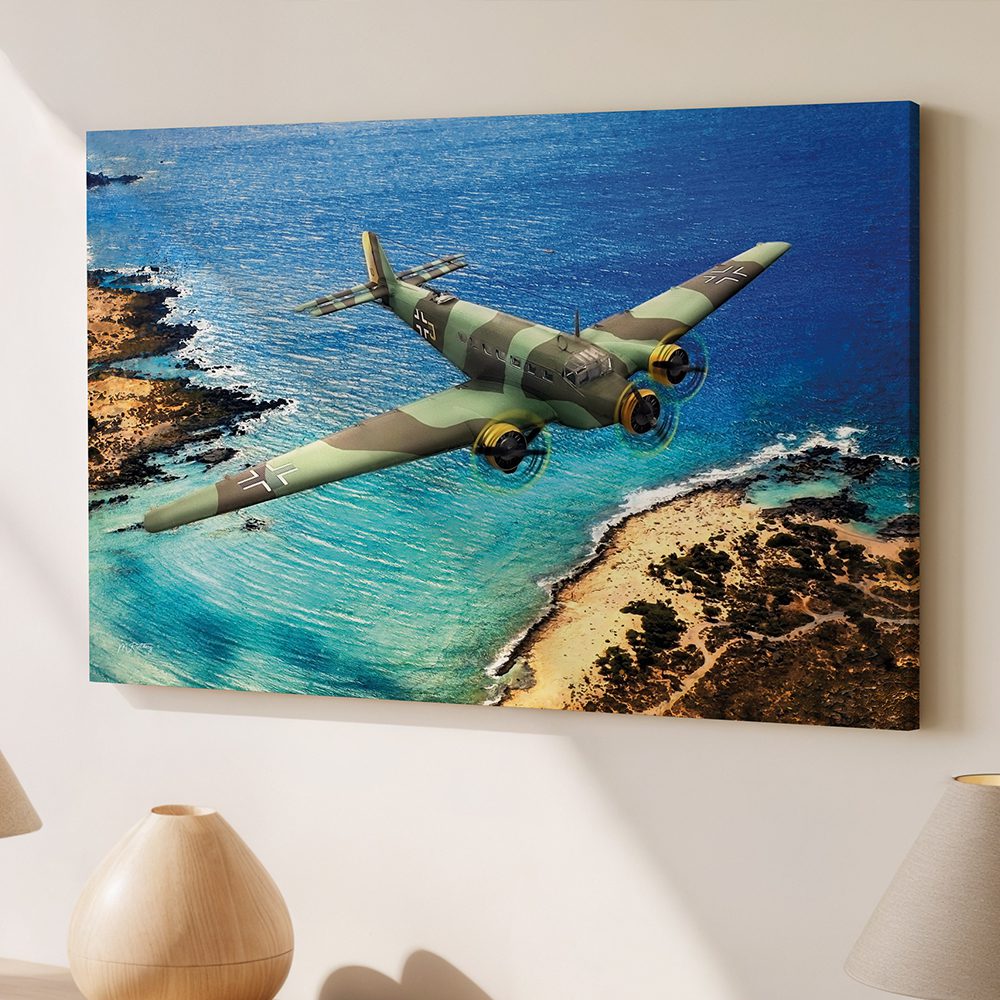
Crete, 1941. A German JU-52/3m transport plane – nicknamed Aunt Ju – arrives at the coast of the island of Crete. These Junkers were vital for the dropping of paratroopers and supplies during this campaign.
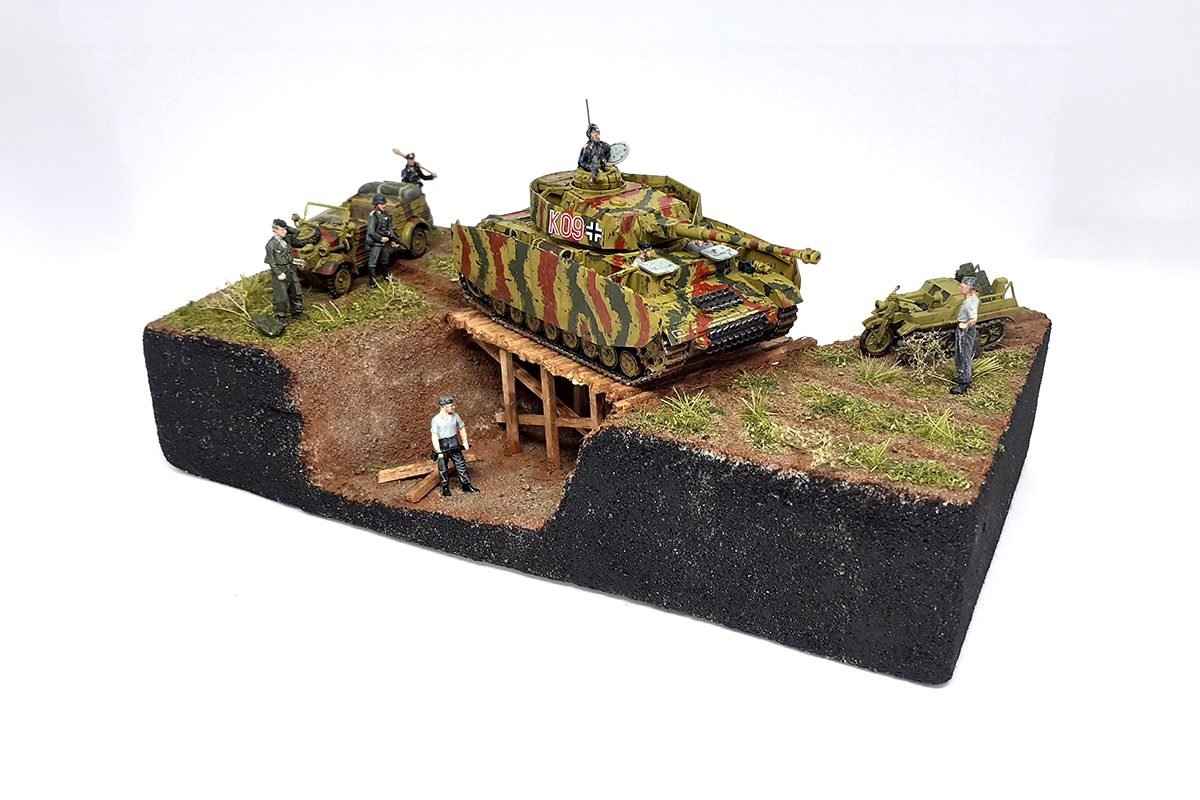
A Panzer IV from the 20th Pz.Div. drives over a bridge made by the engineers. It’s the first time that a tank makes use of this bridge, so the bystanders look closely if the construction will hold the weight.
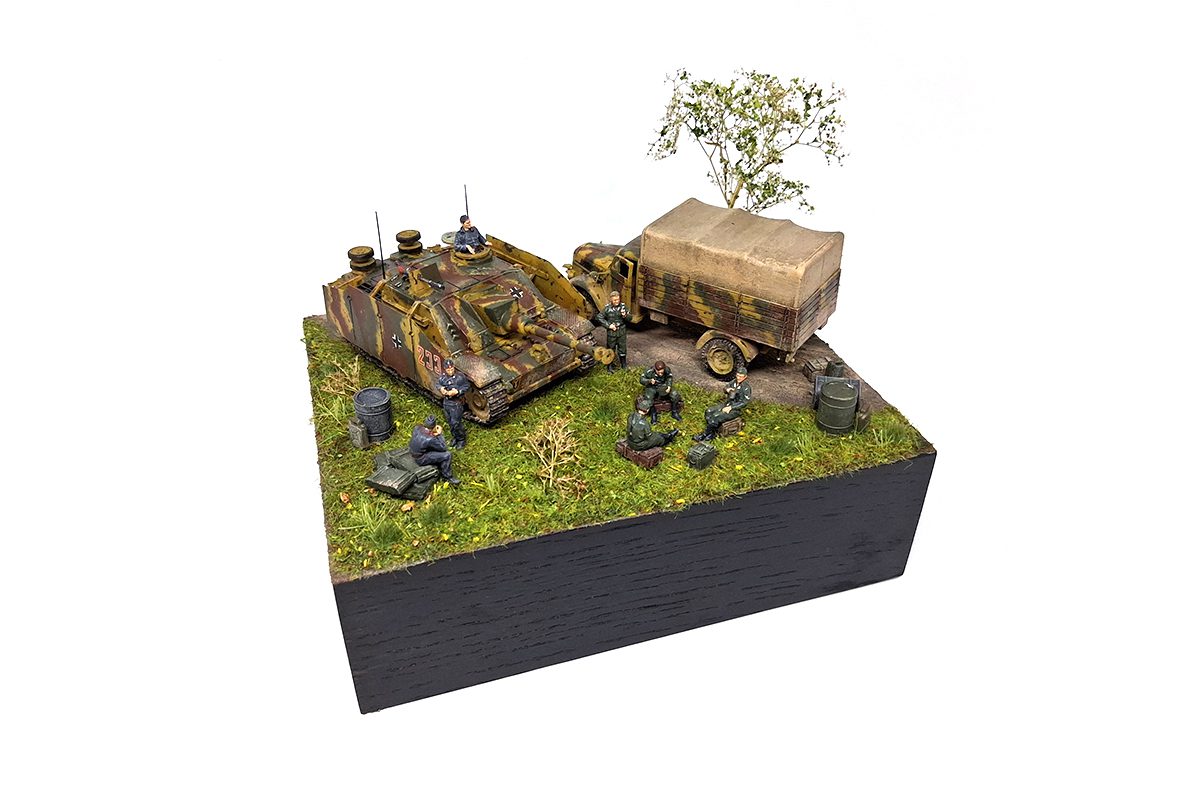
A Stug III from the 16th Panzer Division and it’s crew are glad to see that ammo and fuel has arrived with an Opel Blitz truck. After some labour the men take a break, with coffee and some rations. The next battle awaits.
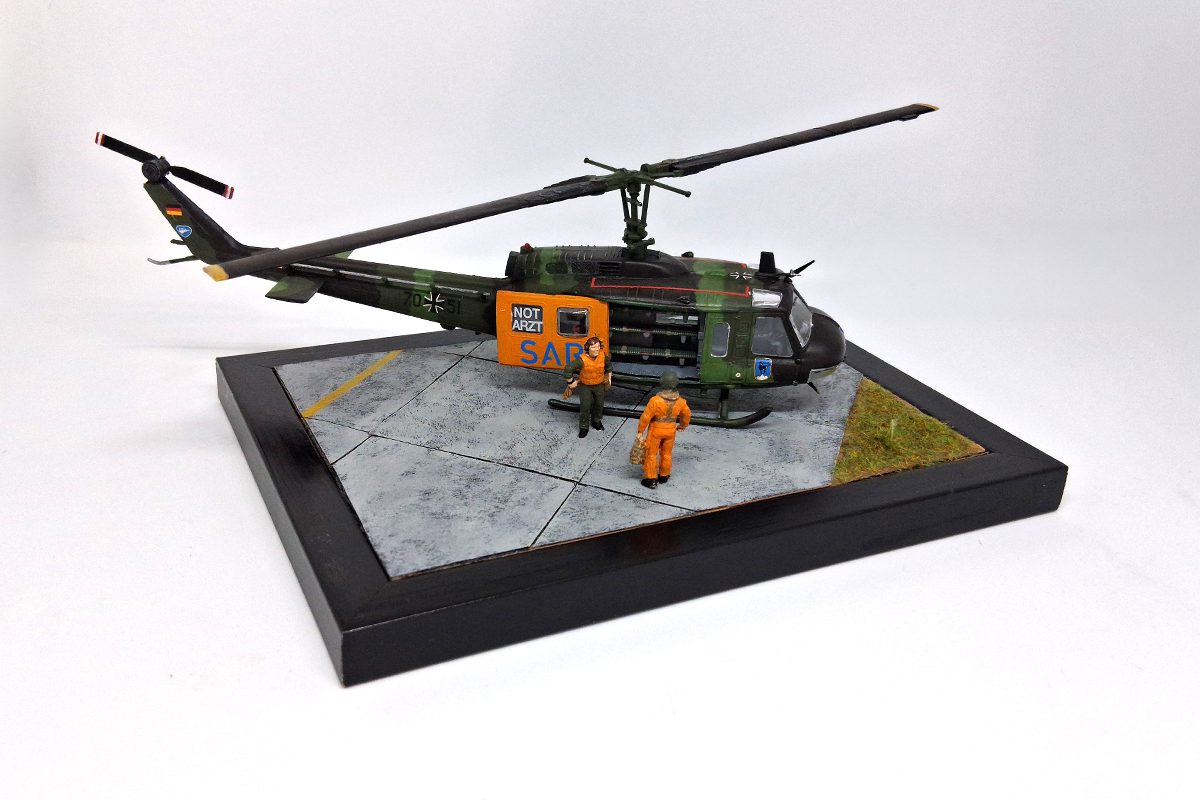
This is a Bell UH-1D serving the Search and Rescue unit (SAR) in the German Air Force. This version depicts one from the Lufttransportgeschwader LTG 61 in Penzing, Germany.

This diorama displays a German Midget Submarine called the ‘Biber’ or ‘Beaver’. Armed with two externally mounted torpedoes or mines, they were intended to attack coastal shipping.

This scene displays a Jagdpanzer IV of the 2nd Panzer Division on the move in Normandy.

The Kraftfahrzeug 305 (abbreviated Kfz. 305) was a box-type vehicle designed for a wide variety of tasks and used by Germany during World War II.

The Junkers Ju 52/3m (nicknamed Tante Ju (“Aunt Ju”) and Iron Annie) is a transport aircraft that was designed and manufactured by German aviation company Junkers.

When the Messerschmitt Bf109 entered service in February 1935, it was one of the most advanced aircraft in the world.

The Tiger I was a German heavy tank of World War II that began operational duty in 1942 in Africa and in the Soviet Union.