

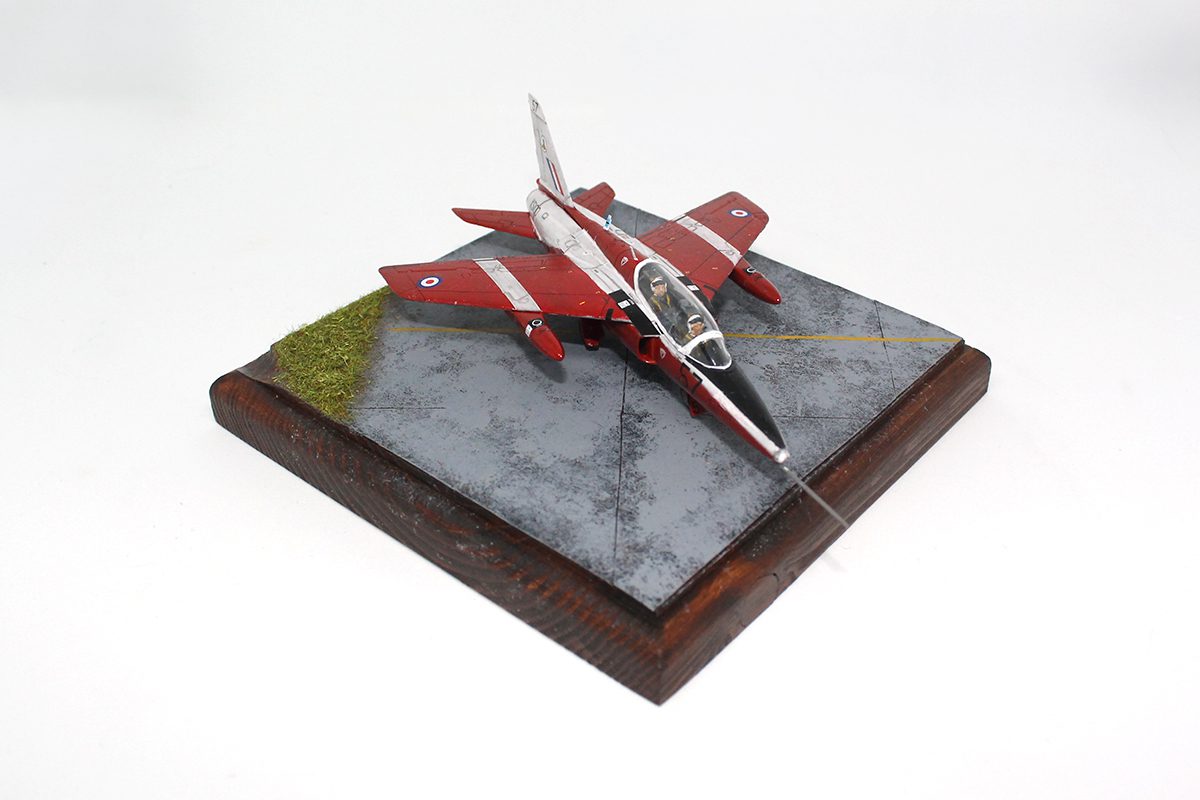
A Folland Gnat belonging to RAF Valley is ready to take off in Wales. The Folland Gnat was originally developed as a light and affordable jet fighter, but went on to be used extensively by the Royal Air Force as an advanced fast jet training aircraft.
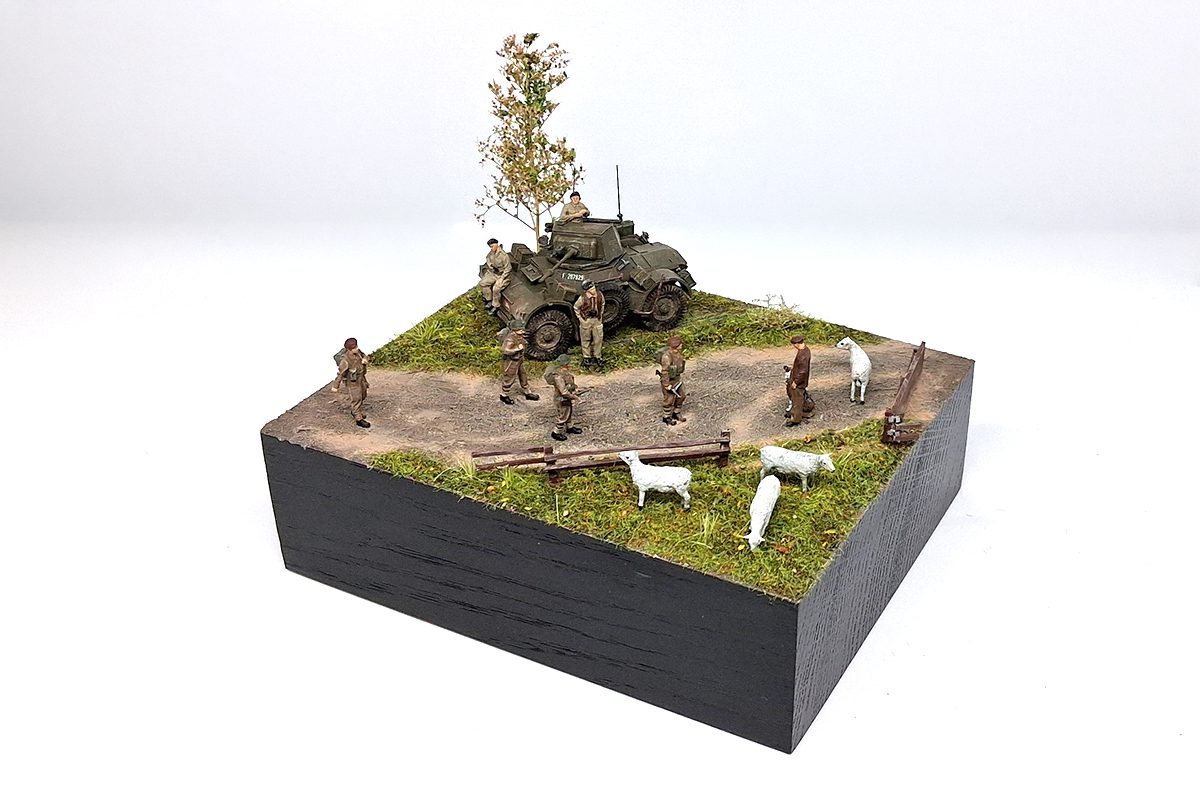
British crew members of the 2nd Household Cavalry take a rest outside of their DAC MK I. They have parked close to the field of a shepherd.
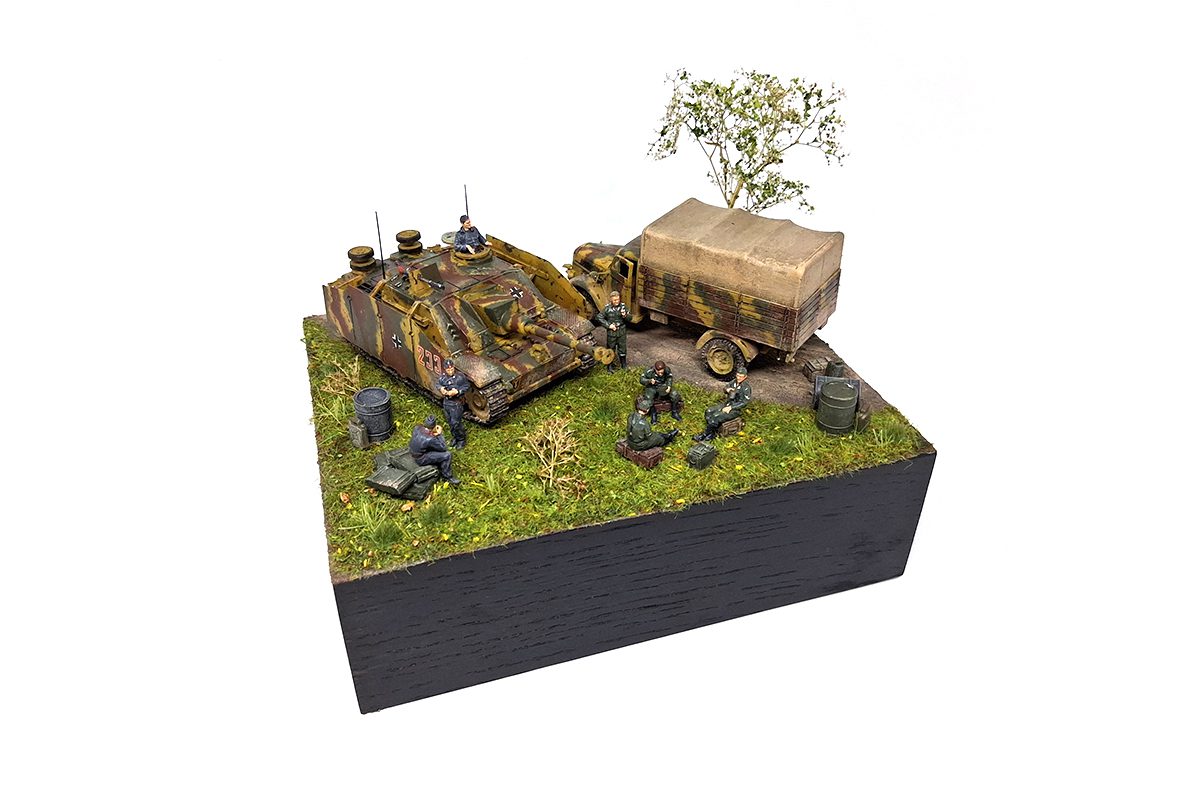
A Stug III from the 16th Panzer Division and it’s crew are glad to see that ammo and fuel has arrived with an Opel Blitz truck. After some labour the men take a break, with coffee and some rations. The next battle awaits.
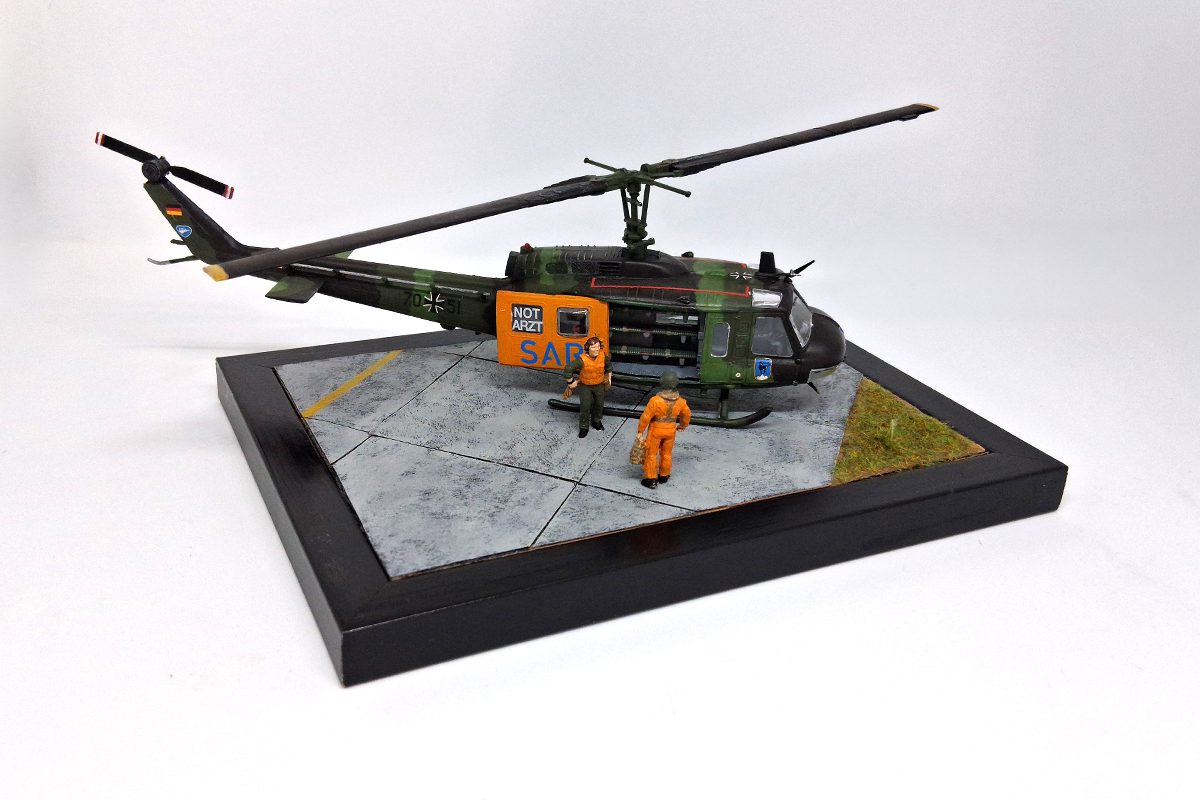
This is a Bell UH-1D serving the Search and Rescue unit (SAR) in the German Air Force. This version depicts one from the Lufttransportgeschwader LTG 61 in Penzing, Germany.
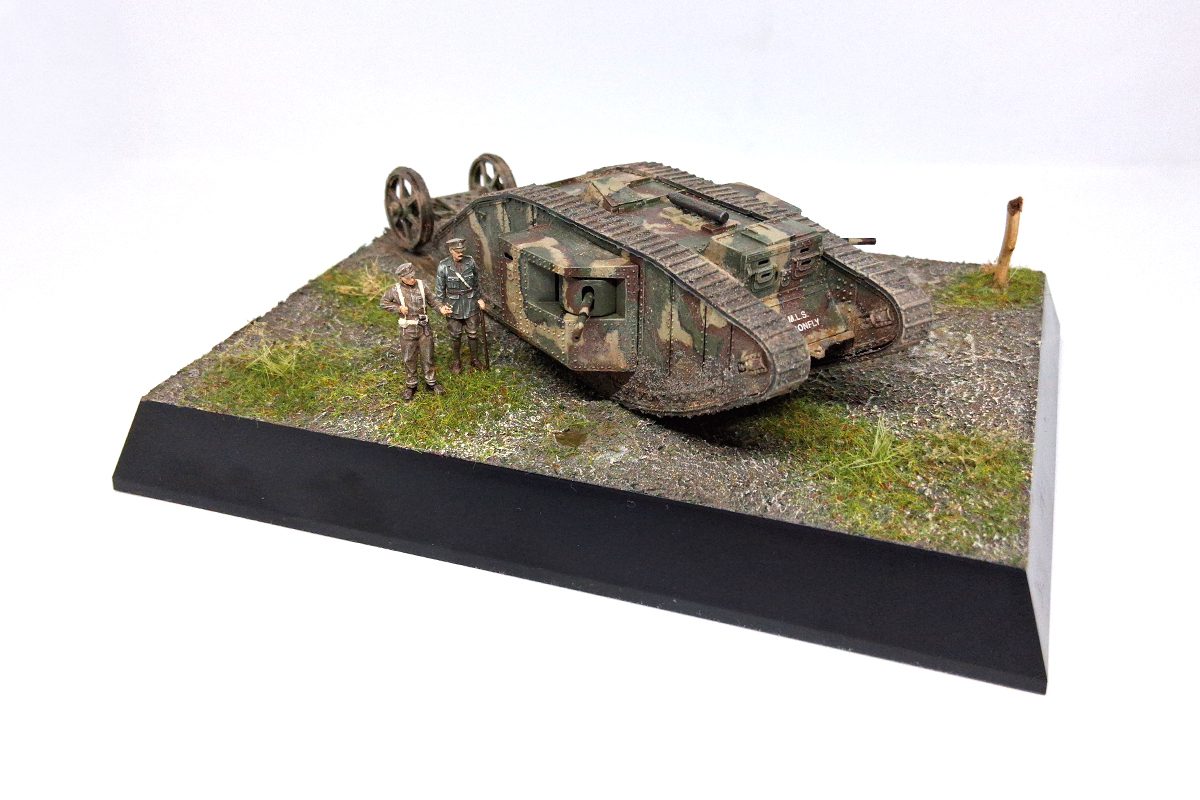
During WWI a new weapon entered the battlefield, the so called tank. The Mark I entered service in August 1916, and was first used in action on the morning of 15 September 1916 during the Battle of Flers-Courcelette, part of the Somme Offensive.
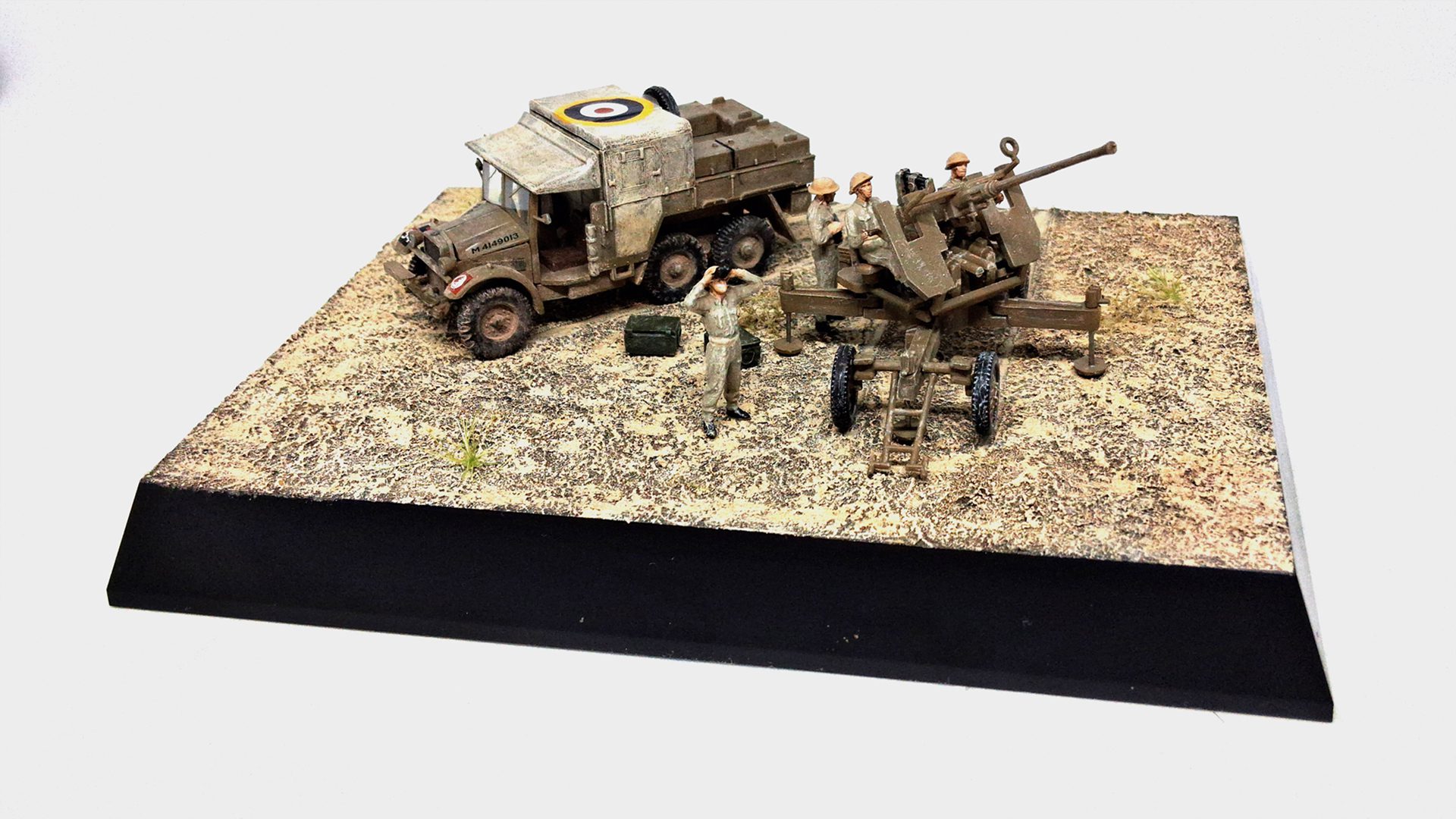
A Bofors 40 mm gun is prepared to light up te sky in North Africa. These Bofors cannons were heavily used during World War II, being used as anti-aircraft guns.

This diorama displays a German Midget Submarine called the ‘Biber’ or ‘Beaver’. Armed with two externally mounted torpedoes or mines, they were intended to attack coastal shipping.

This Leopard 2A6 is on the move, while it’s tank crew is scanning the area, looking for potential targets.

This scene displays a Jagdpanzer IV of the 2nd Panzer Division on the move in Normandy.
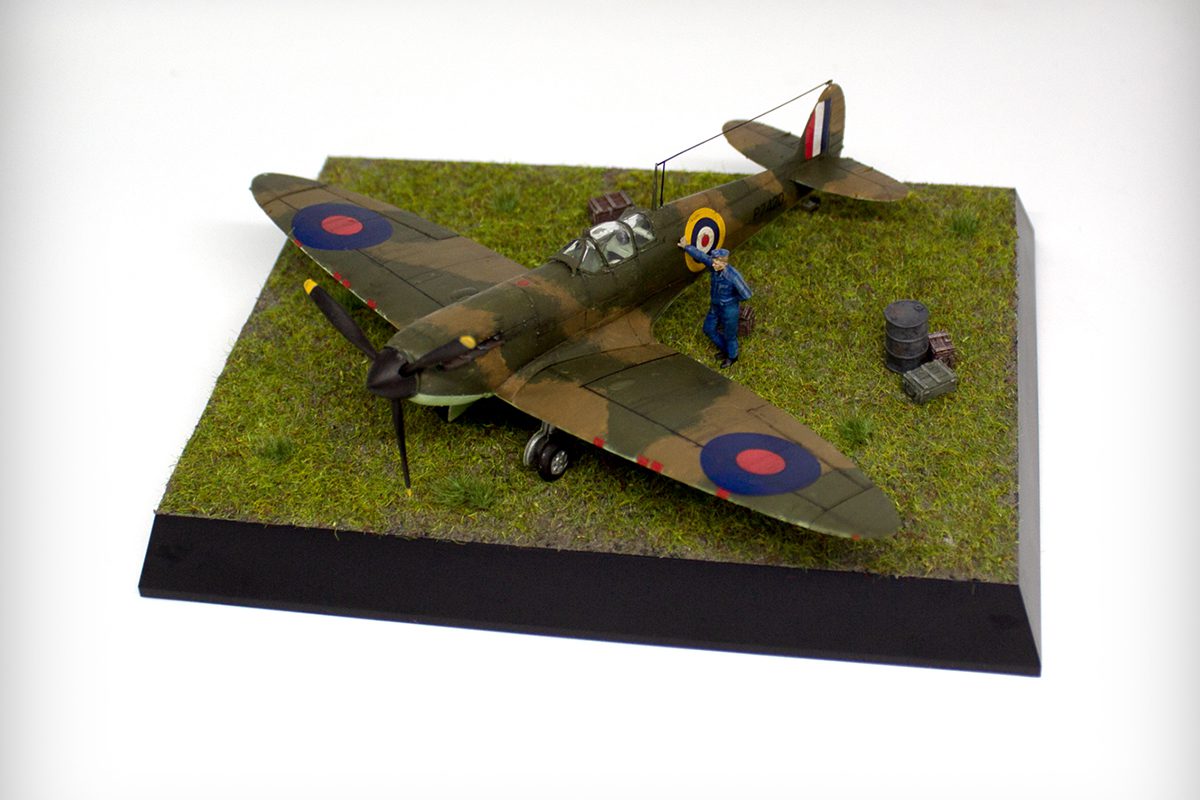
A British mechanic stands proudly next to a Supermarine Spitfire Mk.IIa from No. 19 Sqn. This plane will be made ready to defend the skies during the Battle of Britain in 1940.